J.D. Salinger's The Catcher in The Rye is a war novel, much like Vonnegut's Slaughterhouse Five, hidden beneath a classic coming of age story.
Most readers, myself included, initially consume the book as a teen and are able to relate to the protagonists sharp views on the world around him and feel the catharsis along with him as the novel climaxes then abruptly ends.
However, bearing in mind J.D. Salinger's WWII experience as an infantryman who carried and worked on pages of the novel with him in foxholes, and used his multilingual skills as a CIC Nazi spy interrogation specialist, who was supposedly involved with Project Artichoke, we can make further sense of the book.
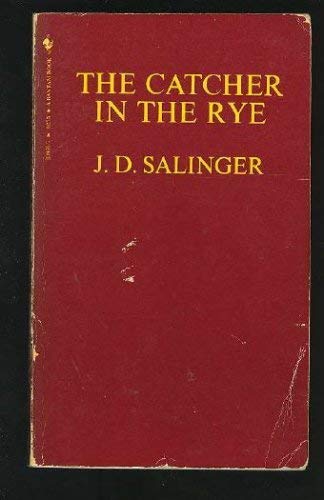
The novel is an extended interrogation exercise-- via a cadenced, hypnotic conversation between the narrator, his psychoanalyst and the reader, and is filled with neuro-linguistic passages. A carefully crafted buildup of specific phrases and what appear as trigger words shock the system into momentary altered consciousness, as mentioned, at the climax of the book. Some readers have reported feeling weakened and melancholic for days following completion of the text.
This architectural underpinning is designed to force a confession out of the subject, who, due to the literary style, is both the narrator and reader-- Salinger draws you deeply into the thoughts of his narrator as if to merge your own inner voice with theirs. Several affirmations are also mixed into the text for stylistic effect, though this only aids in blurring the lines between literary art and outright CIA-level, military grade questioning.
Notice the books protagonist is staunchly negative for nearly the entire text in various ways. Then as he gets closer and closer to suicide or death, the author very suddenly introduces a third voice into the text and cranks the intensity knob to ten, all the while maintaining his hypnotic cadence, then, finally, everything flips... from negative to positive and we experience baptismal rains as they soak our narrator's symbolic hunters hat.
Then, suddenly, the book ends. And why shouldn't it? Salinger has gotten what he needs from us.
The hypnotic effects of the text are not to be understated, but moreso, the conclusion of the book forces the reader, much like the narrator, to self reflect. As it turns out, some readers are ill-equipped to face the music-- several famous assassins have cited the text as a catalytic ingredient to their madness.
As teens we are able to understand the plot on the surface-- a prep school teen is forced to reckon with the fact he must grow up and leave his childhood in the past.
As an adult we more closely notice details like implied sex abuse and the harshness of the narrators confessions which include disturbing themes of societal alienation, suicidal ideation, religious blasphemy, alcoholism and an overall mental unwellness. The narrator's perceptiveness goes well beneath the surface, where the author has woven in dense subtext.
As a discerning reader we can draw the conclusion the text is coded with Salinger's military disillusionment over the course of his WWII experiences. With D.B. (Department of Defense) "out west" ... "writing movies," and "being a prostitute," the "phony" military brass "adults" (and the events of the war) have pushed Salinger's narrator, despite his unwavering faith in the purity of his dead brother, "Allie", to the brink of a mental breakdown which is described and confronted throughout the text, and ultimately accepted only through a loss of innocence, the narrator's melancholic carousel realization a christening of his rank as a member of the military.
Of course, Salinger himself both escapes and shares the effects of his WWII experiences and subsequent PTSD--He checked into a hospital with "battle fatigue" after the surrender of Germany in 1945-- through his own will to live-- as reflected through self-belief in his own literary gifts. His decision to publish, sell millions, then drop out of society is the ultimate proof. He escaped the nightmares of war through writing.


